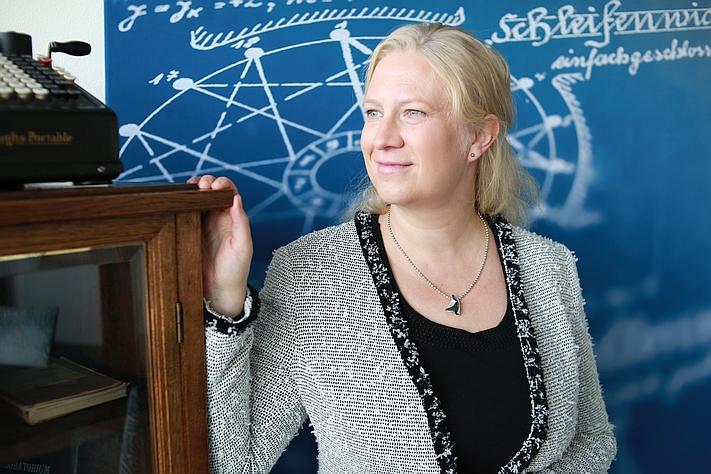
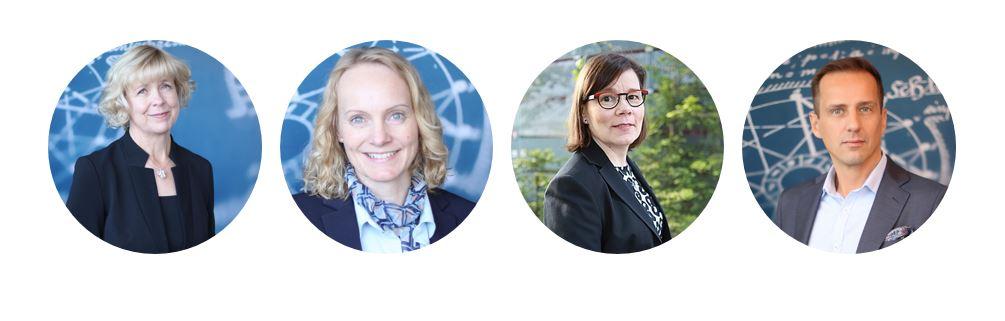
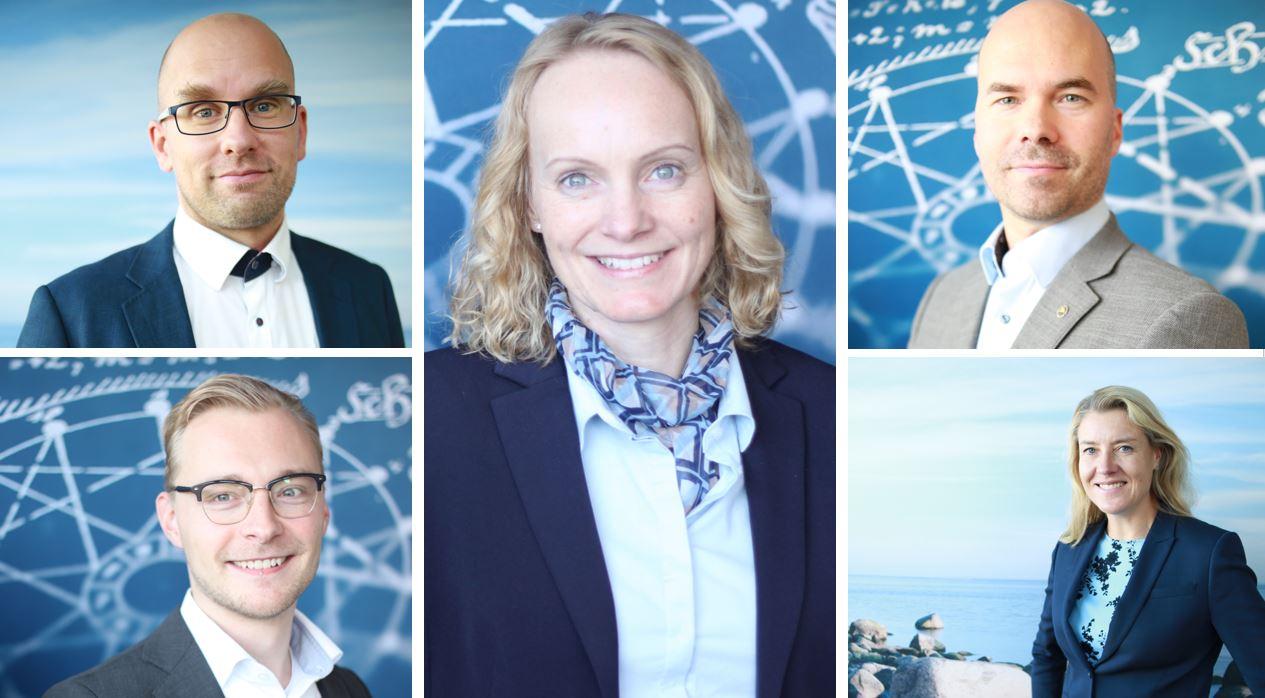
Pamela Lönnqvist WTR 1000 – Top Trademark Professional 2021

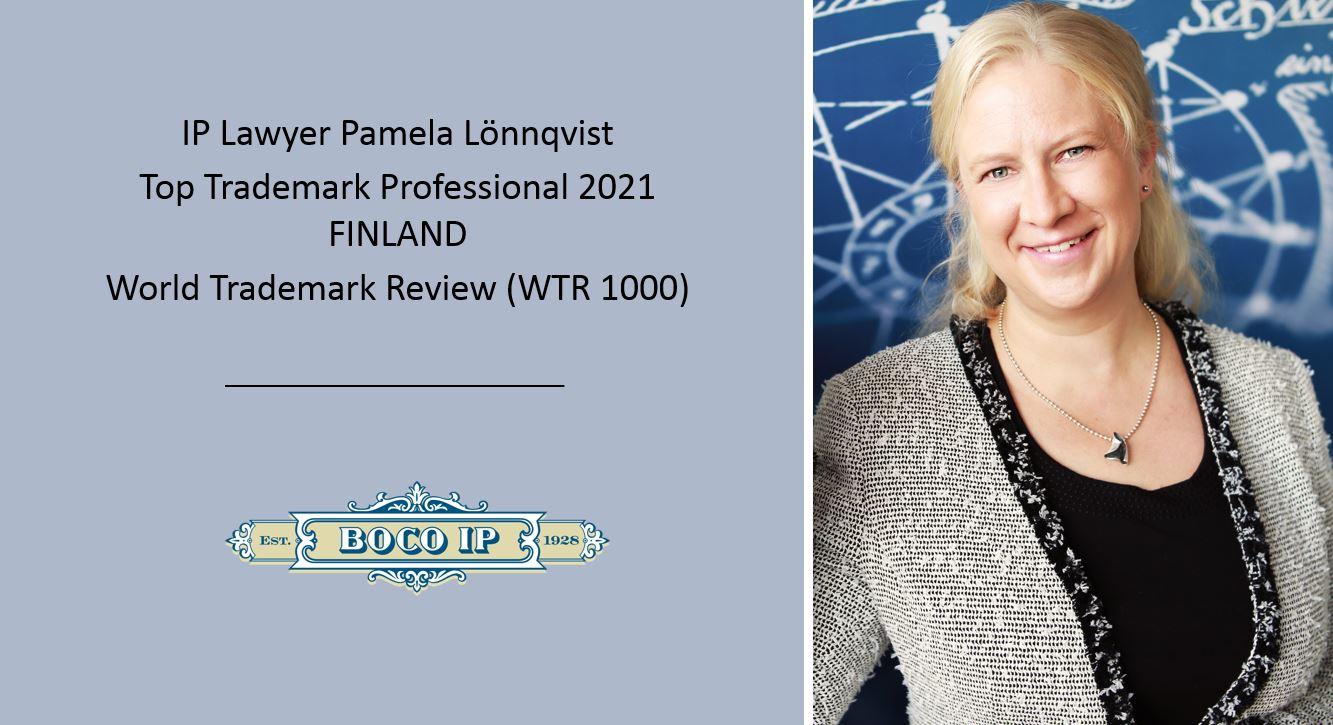
WTR 1000 Pamela LönnqvistIP lakimiehemme Pamela Lönnqvist on saanut erityshuomion kansainvälisessä WTR 1000 tutkimuksessa.

Myös Boco IP sai tunnustusta yhtenä Suomen parhaimmista tavaramerkkien suojaukseen erikoistuneista yrityksistä.

WTR1000 on maailmanlaajuinen riippumaton tavaramerkkeihin erikoistunut tutkimus. Tutkimus julkistaa kerran vuodessa maailman parhaimmat tavaramerkkialan ammattilaiset yli 80 maasta. Suomea koskeva WTR1000 lista löytyy täältä: https://www.worldtrademarkreview.com/directories/wtr1000/rankings/finland

Elina Heikkilä WTR 1000 – Top Trademark Professional 2021

WTR 1000 Elina Heikkilä

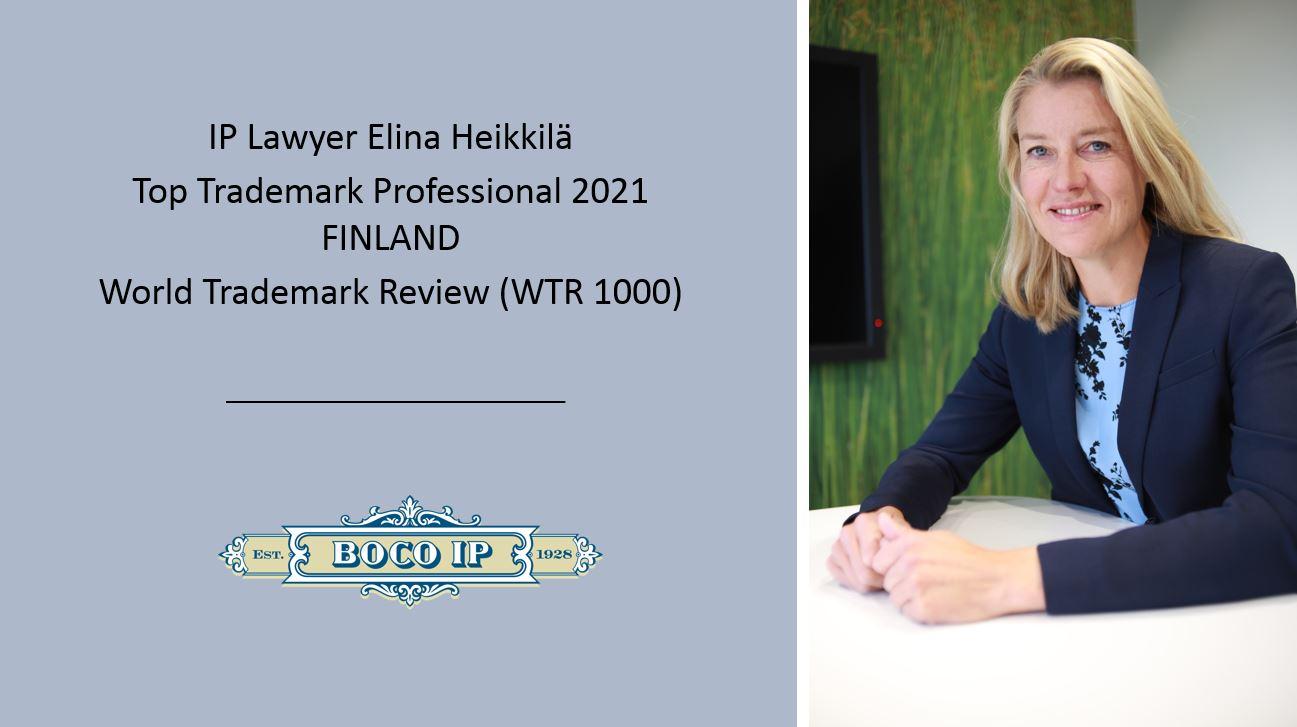
IP lakimiehemme Elina Heikkilä on saanut erityshuomion kansainvälisessä WTR 1000 tutkimuksessa.

Myös Boco IP sai tunnustusta yhtenä Suomen parhaimmista tavaramerkkien suojaukseen erikoistuneista yrityksistä.

WTR1000 on maailmanlaajuinen riippumaton tavaramerkkeihin erikoistunut tutkimus. Tutkimus julkistaa kerran vuodessa maailman parhaimmat tavaramerkkialan ammattilaiset yli 80 maasta. Suomea koskeva WTR1000 lista löytyy täältä: https://www.worldtrademarkreview.com/directories/wtr1000/rankings/finland

Laura Roselius WTR 1000 – Top Trademark Professional 2021

WTR 1000 Laura Roselius

IP lakimiehemme Laura Roselius on saanut erityshuomion kansainvälisessä WTR 1000 tutkimuksessa.

Myös Boco IP sai tunnustusta yhtenä Suomen parhaimmista tavaramerkkien suojaukseen erikoistuneista yrityksistä.

WTR1000 on maailmanlaajuinen riippumaton tavaramerkkeihin erikoistunut tutkimus. Tutkimus julkistaa kerran vuodessa maailman parhaimmat tavaramerkkialan ammattilaiset yli 80 maasta. Suomea koskeva WTR1000 lista löytyy täältä: https://www.worldtrademarkreview.com/directories/wtr1000/rankings/finland

Peter Åkerlund WTR 1000 – Top Trademark Professional 2021

WTR 1000 Peter Åkerlund

IP lakimiehemme Peter Åkerlund on saanut erityshuomion kansainvälisessä WTR 1000 tutkimuksessa.

Myös Boco IP sai tunnustusta yhtenä Suomen parhaimmista tavaramerkkien suojaukseen erikoistuneista yrityksistä.

WTR1000 on maailmanlaajuinen riippumaton tavaramerkkeihin erikoistunut tutkimus. Tutkimus julkistaa kerran vuodessa maailman parhaimmat tavaramerkkialan ammattilaiset yli 80 maasta. Suomea koskeva WTR1000 lista löytyy täältä: https://www.worldtrademarkreview.com/directories/wtr1000/rankings/finland

WTR 1000 rankings for year 2021 have been published: Boco IP is also this year recommended as a leading firm for protecting trademarks

WTR 1000 rankings for year 2021 have been published: Boco IP is also this year recommended as a leading firm for protecting trademarks. Professionals Peter Åkerlund, Laura Roselius, Elina Heikkilä and Pamela Lönnqvist are specifically mentioned in the research report.

World Trademark Review (WTR 1000) rankings for 2021 have just been published and there is a lot to celebrate as Boco IP is again ranked as one of the leading trademark firms in Finland.

Boco IP’s trademark practice and IP Lawyers are recognized in the 2021 ranking with the following words:

“Collaborating with Boco IP is always smooth and efficient; you feel fully supported. They are involved every step of the way, from planning strategies to staying on top of potential deadlines. They communicate in a relaxed and friendly manner, while also remaining completely professional. They are a go-to for trademark matters in Europe.”

“A top-notch line-up consists of Peter Åkerlund, Laura Roselius, Elina Heikkilä and Pamela Lönnqvist. The troop takes its cue from Åkerlund, who designs and executes astute blueprints to ensure that brands enjoy long-term health. Roselius likewise watches over portfolios with a vigilant eye and devises fool-proof plans to take down counterfeiters. Heikkilä’s strong suit is securing marks across a multitude of jurisdictions, courtesy of her finely honed knowledge of European laws and procedures. When things get heated, Lönnqvist steps up to the plate, showcasing terrific advocacy skills in the process.”

“Together, they are reliable, responsive and always find both pragmatic and tactical solutions to complex scenarios. They really care about their clients and that is one of the many reasons the group is enjoyable to work with.”

The results confirm Boco IP’s position as a high quality expert in the trademark field.

World Trademark Review WTR is an independent publication in the Intellectual Property field that researches and ranks leading trademark professionals in over 80 jurisdictions.

Boco IP’s IP trademark professionals can be reached at the following addresses:

Peter Åkerlund
IP Lawyer, Partner, ETMA
peter.akerlund@bocoip.com
LinkedIn: https://fi.linkedin.com/in/pakerlund

Elina Heikkilä
IP Lawyer, Partner, ETMA
Elina.heikkilä@bocoip.com
+358 6866 8415
LinkedIn: https://fi.linkedin.com/in/heikkila-elina

Pamela Lönnqvist
IP Lawyer, ETMA
pamela.lonnqvist@bocoip.com
+358 9 6866 8421
LinkedIn: https://www.linkedin.com/in/pamela-lonnqvist/

Laura Roselius
IP Lawyer, Partner, ETMA
laura.roselius@bocoip.com
+358 407384475
LinkedIn: https://fi.linkedin.com/in/lauraroselius

Jerry Härkönen
IP Advisor, IP-Lawyer
Jerry.harkonen@bocoip.com
+358 40 538 7223
https://www.linkedin.com/in/jerryharkonen/

Read more:

https://www.worldtrademarkreview.com/directories/wtr1000/rankings/finland

Karri Leskinen, Jonna Sahlin, Anu Keinänen and Jaana Hämäläinen appointed as expert members of the Finnish Market Court

The Finnish Minister of Justice Anna-Maja Henriksson has named several of Boco IP’s patent attorneys as expert members of the Market Court, where all IP matters are handled in Finland.

Our CEO Karri Leskinen along with Anu Keinänen, Jaana Hämäläinen and Jonna Sahlin, all European Patent Attorneys and Registered Finnish Patent attorneys, have been appointed as expert members of the Market Court to handle and resolve intellectual property matters heard at the court.

The Market Court, which has jurisdiction over the whole of Finland, deals with procurement matters, competition and control matters, market law matters and intellectual property matters. In addition to the Chief Judge of the Market Court, the special court has 23 Market Court Judges and two Market Court Engineers. In addition to these, the Government appoints part-time expert members for five years at a time.

We warmly congratulate Karri, Anu, Jaana and Jonna on the appointment.


A Covid-19 patent pool

Great efforts are currently being made to discover vaccines that would be effective against the COVID-19 virus. When effective and safe vaccines have been discovered and tested, they will likely be produced on a very large scale.

Any patent rights that pertain to the components of the vaccine or the equipment needed for manufacturing them could then affect the production process. If, for example, company A owns a patent which gives it an exclusive right to produce component X in lots of countries, and if component X is in great demand due to the vaccination effort, then company A could cause harmful delays in the production of the vaccine by insisting that no one else should fabricate component X.

The World Health Organization recently proposed that a COVID-19 patent pool should be created to proactively overcome any obstacles that the vaccination effort may face from patent rights. At the present time this is just a proposal and it will presumably require a lot of debate and compromise before any formal agreement can be reached. But let’s take a look at what the proposal might mean.

A patent pool is an agreement where a group of patent holders (typically companies) agree to aggregate their exclusive patent rights in a “pool”. The pool then sells licenses to these patent rights to third parties. These licenses might cover all rights included in the pool, or any particular subset of them. Patent pools are nowadays found mostly in the field of electronic communication and electronics (although even there, their number is quite small), where their creation often goes hand in hand with technology standardization. The MPEG-2 standard is one example.

It could be very profitable to own an exclusive patent right to a piece of technology which is essential to a standardized solution: the standard will force everyone to adopt the standardized technology, so the demand for a patent license will inevitably be high and the owner of the patent could in principle freely set the price.  To prevent patent owners from abusing their monopoly, standardization organizations often pose certain requirements on patent owners before a standard is finalized. Patent pooling can be one way to meet such requirements. Once a patent pool is formed around a standardized technology, developers who adopt the standardized technology do not have to negotiate a separately for a bundle of different licenses. Instead they can get everything they need from one place by signing a licensing agreement with the patent pool.

Patent pools focused on disease prevention bear some similarities to ones formed around standardized technologies. The Medicines Patent Pool backed by the United Nations has effectively expanded the worldwide availability of medicines for treating HIV, Tuberculosis and Hepatitis C in the past decade. Patent owners voluntarily agree to license their patents to the pool under certain conditions. The pool then makes licenses available to third parties, such as generic drug manufacturers, so that they can manufacture cheaper generic drugs for use in developing countries. The third parties obtain their licenses far cheaper than they would do if they negotiated directly with every patent owner. The patent owners gain royalties and positive publicity. They are also relieved of the need to exercise oversight over the licensees – the UN-administered patent pool checks qualifications before granting the license and sees to it that the terms of the licenses are followed.

The Medicines Patent Pool might provide a useful practical template for how a COVID-19 patent pool might be administered. Like any patent pool, a COVID-19 patent pool would have to be voluntary. However, the COVID-pandemic also differs so much from HIV, Tuberculosis and Hepatitis that the patent pool will face a number of entirely novel challenges.
First, while we know that vaccination is needed urgently, it is uncertain which particular vaccines will in the end be approved for production. In contrast, HIV, Tuberculosis and Hepatitis have been treated for decades, and the state of research is much more settled. Companies might be reluctant to voluntarily cede their intellectual property rights to a patent pool in these early stages if it is still uncertain whether or not those rights will actually be needed for fighting the pandemic. The COVID-19 patent pool might therefore have to be administratively linked to the vaccine development process so that the vaccine selection process can proceed hand-in-hand with the building of the patent pool.

Second, the global character of the pandemic makes the problems more complex than anything the Medicines Patent Pool has faced. Companies are presumably more reluctant to voluntarily cede their patent rights globally than to cede them only in selected developing countries, as they do in the Medicines Patent Pool. The geographical coverage of a COVID-19 patent pool may have to be weighed against its practical feasibility – would it be worthwhile to narrow the coverage of the pool if that would increase the amount of voluntary contributions? The same tradeoff may have to be considered with regard to technological coverage – instead of trying to cover every key technology relating to COVID-19 prevention, would it be more feasible to implement a voluntary patent pool only for a small number of technologies which allow cheap vaccine production in and for poor countries?

Third, the economic consequences of the pandemic could influence how much enthusiasm patent owners show for voluntarily ceding their patent rights to a common pool. Both small and big patent-owning companies face uncertain times. The patent pool would probably have a better chance of success if the necessary patent rights are owned by large companies with sufficient resources for weathering the pandemic than if they are owned by small companies struggling to survive.

And fourth, in addition to the fact that the best vaccines are still unknown, it is also unknown how effective they will be. The Medicines Patent Pool was needed because HIV, Tuberculosis and Hepatitis C proved to be difficult to eradicate (for different reasons). Companies might be reluctant to voluntarily cede their patent rights to a Covid-19 patent pool for a long time period if seems likely that the prevention efforts could be very effective and short-lived. Our knowledge of the virus and its prevention are changing so rapidly that nobody can predict what the situation will look like a year from now. In order to persuade companies to cede their patent rights, the pool may have to implement a “sunset clause” which guarantees that the rights will return to their owners when the pandemic has subsided.
Any of the four points raised above could lead us to wonder if it would really be possible to create a voluntary COVID-19 patent pool. This leads to a bigger question: perhaps the COVID-19 patent pool should not be voluntary? Could patent rights just be revoked or temporarily suspended by government fiat? This seems unlikely in the current epidemic unless it takes a sharp turn for the worse and it becomes clear that the exclusive rights exercised by some patent owners clearly stand in the way of effective treatment.

However, the pandemic has already forced decision-makers to take harsh and rapid short-term actions to prevent the spread of the virus. Political actions in the medium and long term will hopefully involve new legislation which aims to make societies more resilient against pandemics in the future. Such legislation could include revisions to patent law as well. That is, instead of asking for voluntary contributions to a patent pool when a pandemic is already under way, governments could enact legislation which sets up a framework for a temporary suspension of patent rights in some field of technology whenever societies are threatened by a pandemic.

Such legislation would be undoubtedly be complicated and I will not here speculate on what it might include. But it is clear that this pandemic could in the long run give us reason to re-evaluate the well-known tradeoff between public and private interest in patent law: in exchange for making their inventions public (which benefits society by enabling new innovations), inventors are granted a temporary monopoly to their invention (which benefits the inventor but may harm society since it limits competition). If the lesson of the COVID-19 pandemic would be that the monopolies provided by patent rights can in some circumstances form a hindrance to quick and effective relief efforts against a global pandemic, then one way to improve the patent system might be to enact rules which suspend some patent rights for a few years when a pandemic strikes.

At the time of writing we still know very little about the rules by which a COVID-19 patent pool might be administered, about the willingness of companies to voluntarily cede their patent rights to the pool, and whether or not such a patent pool would even serve a useful purpose. But even if the COVID-19 patent pool never sees the light of day, the consequences of this pandemic could certainly in the coming years extend into patent law as well.

Boco IP’s Jonna Sahlin named in the Top 250 Women in IP 2020

We are delighted to announce that Jonna Sahlin, European Patent attorney, partner and chairman of the board has been named in this year’s Top 250 Women in IP list, published by Managing Intellectual Property magazine.

Jonna Sahlin, is European Patent Attorney and partner. Day to day, Jonna consults customers on matters relating to intellectual property rights and IP strategy, especially in the fields of chemistry, medicine and diagnostics. Jonna is also a Registered Patent Attorney in Finland and handles the patenting of inventions both in Finland and internationally, as well as conducting freedom-to-operate analyses and providing opinions on the interpretation of patents. She has been employed at Boco IP since 1998. Read more about Jonna here: https://www.bocoip.com/en/person/jonna-sahlin/

https://www.ipstars.com/Lawyer/Jonna-Sahlin/Profile/92929#profile

The list, first published in 2013, recognizes “senior female IP practitioners in private practice who have performed exceptionally for their clients and firms in the past year.” The list is put together based on feedback and recommendations from clients and peers in the IP industry and clients, and reflects to importance of the selected practitioners to the success of their firms.

More information about the individuals and their offices can be found on the IP Stars website: https://www.ipstars.com/NewsAndAnalysis/The-Top-250-Women-in-IP-2020/Index/5738

A new board of directors of Boco IP has been elected

A new board of directors of Boco IP has been elected to oversee the management of the company.

The new chairperson, Jonna Sahlin, is European Patent Attorney and partner. Day to day, Jonna consults customers on matters relating to intellectual property rights and IP strategy, especially in the fields of chemistry, medicine and diagnostics. Jonna is also a Registered Patent Attorney in Finland and handles the patenting of inventions both in Finland and internationally, as well as conducting freedom-to-operate analyses and providing opinions on the interpretation of patents. She has been employed at Boco IP since 1998. Read more about Jonna here: https://www.bocoip.com/en/person/jonna-sahlin/

Patrick Hjelt is Boco IP’s IT manager and is responsible for the IT and security operations of the company. He has been employed at Boco IP since 1997. Read more about Patrick here: https://www.bocoip.com/en/person/patrick-hjelt/

Elina Heikkilä is an IP lawyer who acts as an EU Trademark Attorney and EU Designs Attorney, handling trademark, design right and domain name matters. She is also experienced with pre-mapping and contract matters related to intellectual property rights and in trademark processes in different countries and protection systems. In addition, she is responsible for the international activities of the company. She has been employed at Boco IP since 2011. Read more about Elina here: https://www.bocoip.com/en/person/elina-heikkila/

Tomi Salter is a European Patent Attorney and Registered Patent Attorney in Finland, specialising in mechanical inventions. In addition, his work includes preparing utility model applications, handling invalidation proceedings of utility model registrations, and conducting novelty and database searches. Tomi has been employed at Boco since 2015. read more about Tomi here: https://www.bocoip.com/en/person/tomi-salter/

Thomas Carlsson is a Registered Patent Attorney in Finland and handles patenting of inventions in the fields of micro- and nanotechnology, semiconductor technology, measurement technology and renewable energy. Thomas has been employed at Boco IP since 2016. He previously worked as an examiner at the Finnish Patent and Registration Office.  Read more about Thomas here: https://www.bocoip.com/en/person/thomas-carlsson/


Boco IP highly recommended in IAM1000 World’s Leading Patent Professionals 2020

Boco IP is privileged and delighted to announce that six of our attorneys were listed this year as leading patent professionals in the 2020 edition of IAM1000 The World’s Leading Patent Professionals. Furthermore, the firm as a whole is highly recommended in the publication.

As described by IAM, Karri Leskinen ”oversees the unit’s strategic growth and is always on the hunt for new ways to enhance the customer experience” Jonna Sahlin is “and artful communicator” and is “praised for her ability to clearly explain intricate technicalities to patrons and judges alike. Her freedom-to-operate analyses are crucial for businesses seeking to mitigate risk.” Annika Hakkila is “a font of wisdom” who has “chalked up over 30 years of experience as a product development chemist and as an attorney. Her insight is valued by colleagues and inventors who call her for holistic support”. Christian Westerholm “doesn’t break a sweat when the going gets tough,  he finds creative solutions that meet commercial goals and get the job done with minimum fuss. Oral proceedings at the EPO are a strong suit”. Anu Keinänen is ”extremely diligent” and “exceptionally talented”, she “looks to understand every invention at its core. She is one of the best in the high-tech industry and a pleasure to work with”. Last but not least, Jaana Hämäläinen is ”incredibly experienced in biotechnology”, her “work is brilliant – her office action and prior art analyses are professional and detailed. She also acts as a court expert and lectures widely in her field”.

We would like to thank our customers, colleagues and especially our devoted personnel for all the work that we have done together over the years.